Test Strategy: What to Include + Free Template and Example
A test strategy is a high-level document that sets how a team or product approaches testing: scope, risk priorities, test levels and types, environments, automation, tools, entry and exit standards, defect handling and reporting. It changes rarely. Each release's test plan applies it to one set of features and dates.
This guide is for QA leads, test managers and engineering managers who need to write or fix a test strategy. For the release-level document, use the test plan template. The strategy sets the rules every plan inherits.
What is a test strategy?
The ISTQB glossary defines a test strategy as "a description of how to perform testing to reach test objectives under given circumstances." In plain words, it is your answer to "how do we test here, and why?" It holds the decisions that stay true from one release to the next.
Those decisions cover which risks get the deepest testing, which level catches which bug and what runs in CI. They also set what must be true before a release ships and what proof testers attach. Each call gets made once, not argued again every release.
The head of QA or the QA lead usually owns it, and the engineering manager or CTO approves it. On teams without testers, the engineering manager or a senior engineer writes it.
It changes rarely: review it every 6 to 12 months, or sooner after a big change.
Company-wide or product-level?
The ISO/IEC/IEEE 29119-3 standard for test documents splits the job in two. Company-wide rules sit in a test policy and in organizational test practices. Each project's test plan then carries its own test strategy section.
Most software teams land in between: one strategy per product, shared by every team that ships it. The QA testing guide shows where it sits in the wider QA process.
One page or a full test strategy document?
A team of up to about 10 engineers with one product can fit its strategy on one page. Regulated products, several teams or outside clients need the full document, because auditors and new hires read it without context.
Test strategy vs test plan
A test strategy sets the rules for every release. A test plan applies those rules to one release, with its own scope, dates and people.
| Test strategy | Test plan | |
|---|---|---|
| Question | How do we test, and why? | What do we test in this release, when and by whom? |
| Scope | A product or the whole company. | One release, project or sprint. |
| Lifespan | Years, reviewed every 6 to 12 months. | Weeks, closed after the release. |
| Owner | Head of QA or QA lead. | QA lead or release owner. |
| Typical contents | Risk scale, test levels, CI gates, exit defaults, defect and evidence rules. | Scope, schedule, pinned environments, entry and exit criteria, risks, names. |
| Changes when | Products, risks or rules change. | Scope, dates or builds change. |
| Example line | Every P1 flow has an automated end-to-end check that blocks the release. | Run the 38 P1 checks on rc2 in Chrome, Safari and Edge on Oct 27. |
Keep dates, builds and names out of the strategy, or it goes stale with the first release. ISTQB calls the way you carry out test tasks the test approach, and that is the plan's job. If every plan repeats the same paragraphs on levels, tools and severity, move them into one strategy and link it.
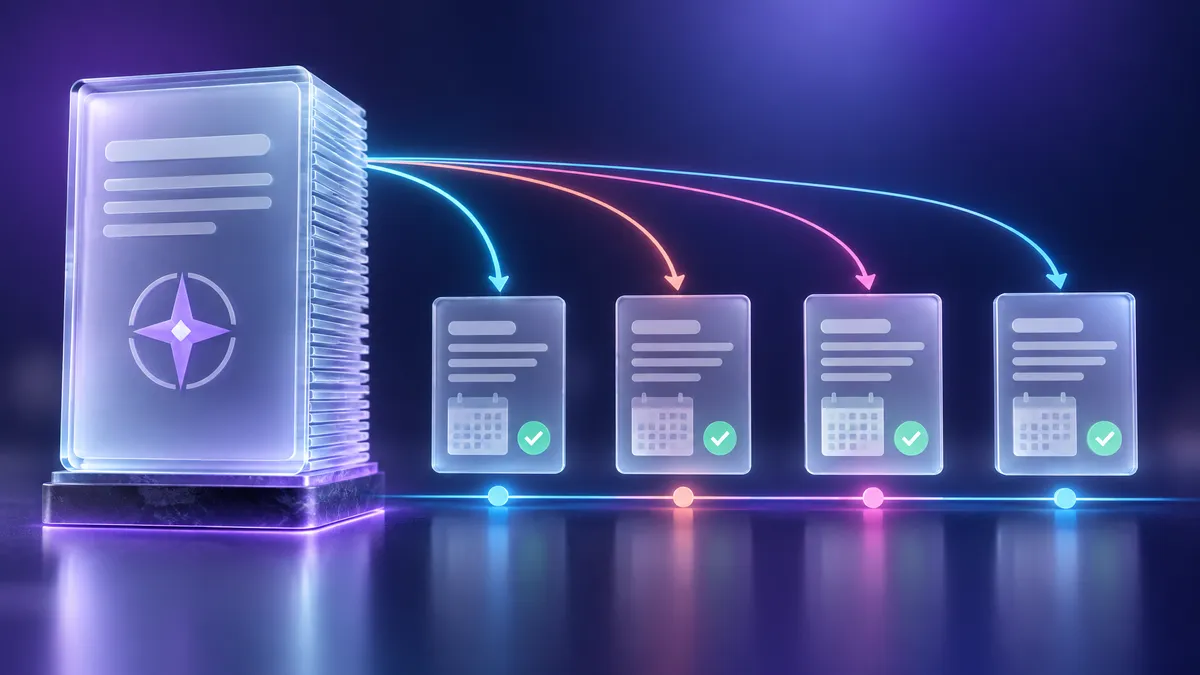
How the strategy feeds plans, cases and the RTM
Each document below takes something from the strategy, and that chain makes a Pass traceable back to a rule.
| Document | Answers | Takes from the strategy |
|---|---|---|
| Test plan | What, when and who for one release? | Risk scale, levels, gates, exit defaults, evidence rules. |
| Test cases and charters | How do we check one behavior? | Priority and evidence per result. |
| RTM | Is every requirement tested and proven? | The P1 coverage rule and file names. |
| Test summary report | Can we ship? | Exit standards and waiver rules. |
The strategy says every P1 requirement needs a passed test with evidence, and the plan lists its P1 requirements. The requirements traceability matrix shows which ones have that pass and file. Each test case carries the priority that sets its depth.
Types of test strategies
The ISTQB Foundation syllabus (2018 edition) names seven types of test strategy. Each one describes how you choose tests, and most teams mix two or three.
| Type | How tests get chosen | Fits when | SaaS example |
|---|---|---|---|
| Analytical (risk-based) | From an analysis of risks or requirements. | Depth must follow risk. | Payments get API, E2E and exploratory tests. Settings get a smoke check. |
| Model-based | From a model, such as a state diagram. | There are many states or rules. | Invoice states: draft, sent, paid, overdue, void. |
| Methodical | From a fixed checklist. | Checks repeat each release. | A release checklist for security headers. |
| Process-compliant (standard-compliant) | From an outside rule, standard or contract. | Work is regulated or audited. | A contract that demands a signed test report. |
| Directed (consultative) | From the advice of stakeholders or experts. | Client projects and niche domains. | The client names the flows that must pass. |
| Regression-averse | From what already works and must stay working. | Mature products that ship often. | Full automated regression on every merge. |
| Reactive | During testing, from what testers learn. | New features and thin specs. | An exploratory charter per new feature. |
A common SaaS mix is analytical to decide where depth goes, regression-averse automation to protect what works and reactive exploratory sessions for anything new. Let risk, release pace, rules and spec quality decide yours.
What to include in a test strategy document
A complete test strategy document has 12 sections. Each one records a decision, not a description: if a section would read the same for any product, make it specific or cut it.
1. Scope and objectives
Name the products, platforms and teams the strategy covers, and list what it leaves out with a reason. Then write 3 to 5 quality goals a reviewer can check.
A weak goal says "ensure high quality." A strong one says "no Critical defect reaches production in a quarter."
2. Quality risks and priorities
List the failures that would hurt most: money, data, security, access or the main user flow. Rate each for likelihood and impact, then turn the result into a priority scale every plan and test case uses.
P1 puts money, data or access at risk, P2 harms a core flow, and P3 is cosmetic. This is risk-based testing: risk decides what you test first and how deep you go.

3. Test levels and types
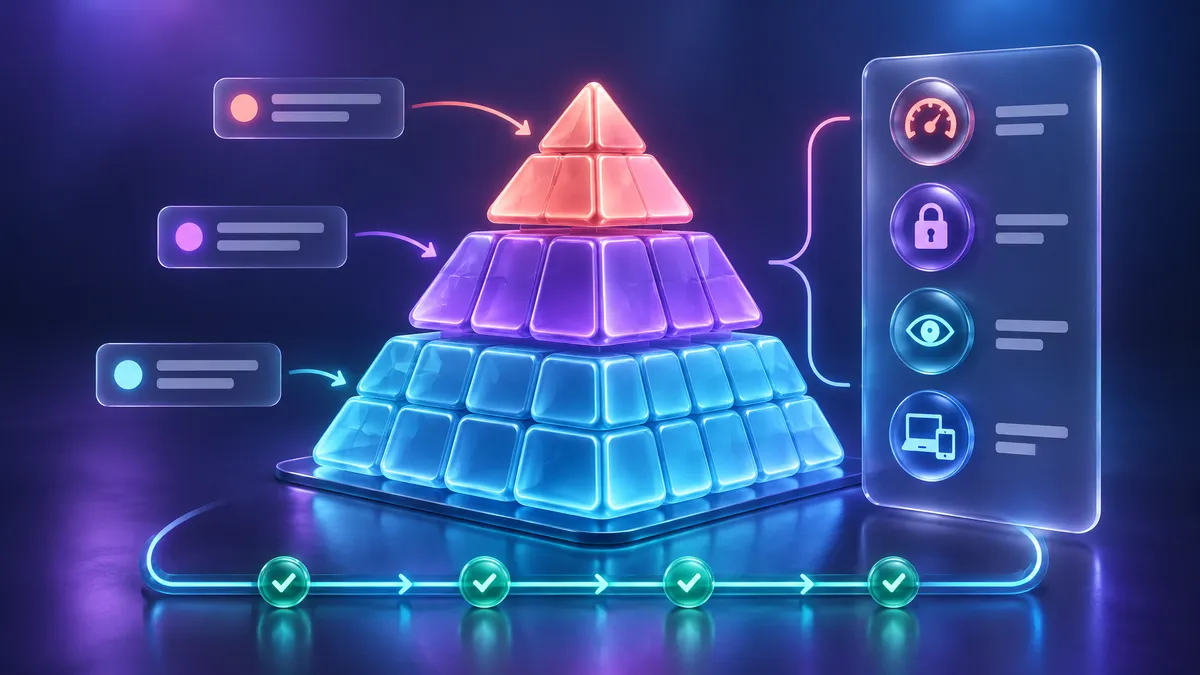
Say which level catches which bug, who owns it and when it runs. The usual shape is the test pyramid: many fast unit tests, fewer integration tests and a few slow end-to-end tests at the top. Ham Vocke's The Practical Test Pyramid explains why the shape works.
| Level or type | What it proves | Owner | When it runs |
|---|---|---|---|
| Unit | One function or class works. | Developers | Every commit. |
| API and contract | Services keep their contracts. | Developers | Every pull request. |
| Integration | Parts work together. | Developers | Every merge. |
| End-to-end | A few critical journeys work. | SDET | Nightly, before release. |
| Smoke | The build is worth testing. | CI | Every deploy. |
| Regression | Nothing that worked broke. | CI, QA | Every merge, in full before release. |
| Exploratory | What nobody scripted. | QA | Per feature, time-boxed. |
| Visual regression | Layouts render as approved. | SDET | UI pull requests. |
| Non-functional | Speed, security and access targets. | SDET, QA | Per release. |
| UAT | The release meets the business need. | Product owner | Before major releases. |
Non-functional checks sit beside the pyramid, not inside it. Give each one a target from your non-functional requirements, such as a response time.
4. Environments and test data
- Environments: local, CI, staging and production smoke checks, each with an owner.
- Parity: staging runs the same versions as production.
- Browsers: a rule, such as the last two major versions. Each plan pins exact versions.
- Test data: seeded or masked, never raw production data, with one account per role and payments in test mode.
5. Automation and CI quality gates
Your test automation strategy fits in two rules. Automate checks that run often, give the same result each time and guard high-risk paths. Keep exploratory sessions, usability testing and UI that changes every sprint manual.
Then name the gate at each pipeline stage (see the Agile section). Add a flaky-test rule: a test that fails, then passes on the same commit, is quarantined within a day and fixed or deleted within a sprint.
6. Entry and exit standards
The strategy sets default entry and exit criteria that every test plan inherits. A plan may tighten them, but only named approvers may relax them, in writing.
- Entry: the build is on staging, smoke passes and P1 cases are reviewed.
- Exit: all P1 cases passed, at least 95% of P2 cases ran, no Critical or Major bugs are open and every failure has proof.
- Waivers: the engineering manager and product owner sign together, and the risk is recorded.
7. Defect management
Severity says how bad the impact is, and the reporter sets it. Priority says how soon to fix it, and triage sets it. A typo on the pricing page is low severity but can be high priority.
| Severity | Meaning | Default fix target |
|---|---|---|
| Critical | Money, data, security or an outage. | Hotfix within 1 business day. |
| Major | Core flow broken, no workaround. | Before the next release candidate. |
| Minor | Works, with a workaround. | Next release or backlog. |
| Low | Cosmetic. | Backlog order. |
Set the triage cadence (daily during a test cycle is common), who attends and the fields every bug needs, such as those in this bug report template.
8. Evidence and reporting standard
Most templates skip this section. Yet developers need evidence to reproduce a bug, and auditors need it to trust a Pass.
| Result | What to attach | Where it lives |
|---|---|---|
| UI bug | Annotated screenshot: numbered steps, one arrow, an "Expected · Actual" callout, build visible. | The defect. |
| Timing or multi-step bug | A 10 to 30 second screen recording with narration, trimmed. | The defect. |
| Long page or log | One scrolling screenshot or the raw log file. | The defect or test run. |
| API or CLI failure | Request, response and log excerpt as text. | The defect. |
| P1 pass | Final-state screenshot, build visible. | The test run. |
| Release sign-off | Summary report, waivers and an RTM export. | The release folder. |
- File names: REQ-ID_TC-ID_build_result_date.ext, such as
REQ-002_TC-103_3.4.0-rc2_fail_2026-10-27.gif. - Redaction: seed fake data first. Cover real secrets or customer data with a solid, opaque box, since blur and pixelate can be reversed (how to redact text). Record seeded data only, because a video is hard to redact later.
- Storage: attach the file to the ticket or test run. Share links can expire and be forwarded, so they never count as the record.
- Reports: a daily status in test cycles and a test summary report at go/no-go.
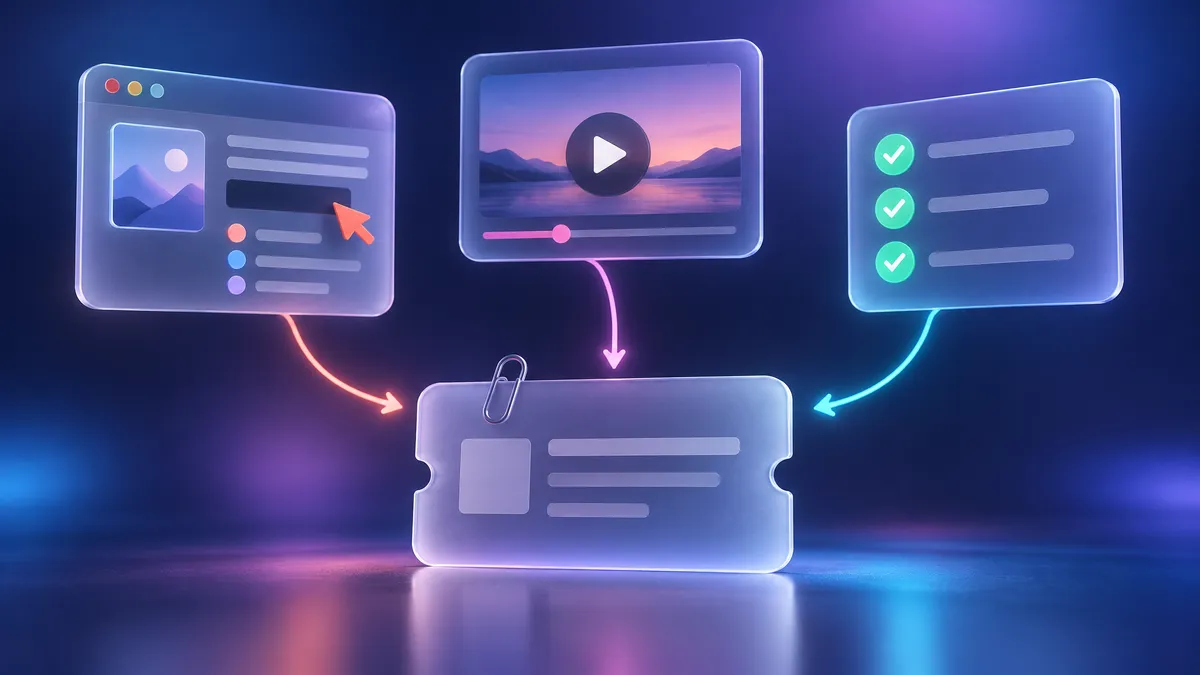
Any capture tool can meet this standard. ScreenSnap Pro covers it in one app on Mac and Windows: numbered counters, arrows and callouts for UI bugs, a filled rectangle for secrets, and Scrolling Capture for long pages and logs (select an area, click Start Capture, scroll down by hand, click Finish). For timing bugs, record with your mic, trim the clip in the built-in editor and export MP4 or GIF.
No capture app on a test machine? The free image annotation tool adds solid boxes, arrows and text in the browser.
9. Roles and responsibilities
| Role | Owns |
|---|---|
| QA lead | The strategy, triage and evidence spot checks. |
| Developers | Unit, API and integration tests, fixes and retests. |
| SDET | Automation, CI gates and the flaky-test list. |
| QA engineers | Test design, exploratory sessions and manual tests. |
| Product owner | Risk ranking, acceptance criteria, UAT and defect priority. |
10. Tools
List one tool per job and its owner, from test management and CI to bug tracking and evidence capture. Name the tool you use, not every option.
11. Metrics
Track a few numbers that change decisions: escaped defects by severity, verified P1 coverage, flaky test rate, time to fix Critical bugs and pull request feedback time. Drop any number nobody acts on.
12. Review cadence and change control
Name the owner, the approver and the next review date. Review every 6 to 12 months, and after a trigger such as a new platform, an escaped Critical defect or a new regulation. Keep it versioned in the repo or wiki and change it through review, like code.

Tired of plain screenshots? Try ScreenSnap Pro.
Beautiful backgrounds, pro annotations, GIF recording, and instant cloud sharing, all in one app. Pay $39 once, own it forever.
See pricing and featuresTest strategy template (copy and paste)
Copy this test strategy template into a wiki page, a repo file or a doc. Replace each bracketed prompt and delete what does not apply.
# Test strategy: [product or organization]
Version and status: [v1.0 · draft or approved]
Owner and approvers: [QA lead · engineering manager, product owner]
Applies to: [products, platforms, teams] · Next review: [date]
Change log: [date · version · change · who]

## 1. Scope and objectives
- In scope: [products, APIs, platforms] · Out: [item · reason]
- Quality objectives: [3 to 5 measurable goals]

## 2. Quality risks and priorities
- Rating: [likelihood x impact] · Scale: [P1 · P2 · P3 meanings]
- Top risks: [risk · priority · test response]

## 3. Test levels and types
- Strategy mix: [for example analytical, regression-averse, reactive]
- Per level: [what it proves · owner · when it runs]
- Non-functional targets: [performance · security · accessibility]

## 4. Environments and test data
- Environments: [name · purpose · data · owner]
- Rules: [parity · browser policy · seeded or masked data]

## 5. Automation and CI quality gates
- Automate: [what] · Keep manual: [what and why]
- Gates: [stage · checks · what it blocks]
- Flaky tests: [quarantine rule · fix deadline · owner]

## 6. Entry and exit defaults
- Entry: [build, smoke, reviewed cases]
- Exit: [P1 passed · P2 run rate · open defects · evidence]
- Waivers: [who approves · where it is recorded]

## 7. Defect management
- Severity: [Critical, Major, Minor, Low] · Priority: [who sets it]
- Triage: [cadence · attendees] · Fix targets: [per severity]

## 8. Evidence and reporting
- Attach per result: [UI bug · timing bug · P1 pass · sign-off]
- File names: [REQ-ID_TC-ID_build_result_date.ext]
- Redaction: [seeded data · solid box · no blur or pixelate]
- Storage: [where · retention · files, not share links]
- Reports: [daily status · test summary report]

## 9. Roles and responsibilities
- [Role · owns · approves]

## 10. Tools
- [Job · tool · owner]

## 11. Metrics
- [Metric · target · review cadence]

## 12. Review and change control
- Triggers: [new platform · escaped Critical · new regulation]
- Approval: [name · role · date]
One-page test strategy for small teams
For one product and one team, 10 lines cover the key decisions.
# One-page test strategy: [product]
1. Scope: [products, platforms] · Out: [item · reason]
2. Objectives: [2 or 3 measurable goals]
3. Top risks: [risk · priority · how we test it]
4. Levels: [unit and API in CI · E2E for P1 flows · exploratory per feature]
5. Environments and data: [staging rule · seeded data · browser rule]
6. Gates: [PR checks · smoke after deploy · regression before release]
7. Exit defaults: [all P1 passed · no open Critical or Major]
8. Defects: [severity scale · triage cadence · fix targets]
9. Evidence: [what to attach · file names · solid-box redaction]
10. Owner and review: [name · next review date]
Test strategy example: a B2B invoicing SaaS app
This software test strategy example belongs to the demo B2B invoicing app from the test plan and RTM guides, and its release 3.4 plan applies these rules. All names and data are fictional.
Header, scope and objectives
- Header: TS-INV v2.1, approved Sept 15, 2026. Owner: A. Rivera (QA lead). Approvers: M. Chen (engineering manager) and S. Patel (product owner).
- Scope: the web app, the public REST API with webhooks and the admin console. Out: the mobile apps (their own strategy) and load above 2x peak (a yearly capacity test).
- Objectives: no escaped Critical defects per quarter, and every P1 requirement passes with evidence before release. Pull request checks finish in under 10 minutes. New pages meet WCAG 2.2 AA, and the payment API p95 stays under 800 ms at 2x peak.
Risks and test levels
- Mix and priorities: analytical, regression-averse and reactive. P1 puts money, data or access at risk, P2 harms a core flow, and P3 is cosmetic.
| Top risk | Priority | Test response |
|---|---|---|
| Wrong invoice or PDF total | P1 | Pricing unit tests, PDF visual diffs, finance UAT. |
| Double charge on a retried payment | P1 | API retry tests and an E2E decline-and-retry flow. |
| One customer sees another's data | P1 | Permission tests per role, a security review each release. |
| Late or missing receipt email | P2 | An integration test with an email catcher. |
- Levels: unit and API tests on every pull request, integration tests on every merge, and about 40 Playwright journeys for P1 flows, nightly. Each new feature gets a 60-minute exploratory charter, and finance users run UAT before minor releases.
- Non-functional: axe plus a keyboard and screen reader pass on new pages, OWASP ASVS Level 1 checks when login or payments change, and a load test at 2x peak.
Environments, automation and gates
- Environments: CI databases with seeded data, and staging (staging.example.com) with production versions, masked data, the payment sandbox and an email catcher. Production gets read-only smoke checks.
- Browsers: the last two major versions of Chrome, Edge, Firefox and Safari, plus phones at 390 px for P1 flows. Plans pin versions.
- Gates: pull request checks block the merge, and the 14-check smoke suite blocks testing on staging. Regression, visual, accessibility and load results block go/no-go.
- Flaky tests: two flaky runs mean quarantine within a day and a fix or delete within a sprint, owned by the SDET.
Exit, defect and evidence standards
- Exit defaults: all P1 cases passed, at least 95% of P2 cases ran and no Critical or Major defects are open. No P1 row in the RTM is "Not covered."
- Waivers: M. Chen and S. Patel together, in the go/no-go notes.
- Defects: triage runs daily at 16:00 during test cycles. Critical fixes ship within 1 business day, and Major fixes before the next release candidate.
- Evidence: the section 8 table, REQ-ID file names and files attached to the Jira work item. Files are kept for 24 months, as customer contracts require.
Roles, tools, metrics and review
- Roles: A. Rivera owns the strategy and triage, the SDET owns automation, and two QA engineers own test design and evidence. S. Patel owns risk ranking and UAT.
- Tools: Jest, Playwright, k6, axe, GitHub Actions, Jira and a capture app.
- Metrics (monthly): escaped defects, verified P1 coverage, a flaky rate under 2% and time to fix Critical defects.
- Review: Mar 15, 2027, or sooner if the mobile apps join scope or a Critical defect escapes.
Test strategy in Agile and CI/CD
Agile teams still need a test strategy, but a short one that lives close to the code.
Shift left is the core idea: ISTQB defines it as doing testing and QA work as early as possible. In practice, testers join refinement and turn each story's acceptance criteria into test conditions before coding starts.
| Sprint moment | Who | What |
|---|---|---|
| Refinement | Product owner, QA, developers | Acceptance criteria and a risk priority per story. |
| During the story | Developers, SDET | Unit and API tests in the pull request, E2E for new P1 paths. |
| Before the story closes | QA or a second developer | An exploratory charter, bugs filed with proof. |
| Before release | CI, QA, product owner | Full regression, non-functional checks, UAT. |
The pipeline turns these gates into code:
| Stage | What runs | What it blocks |
|---|---|---|
| Pull request | Lint, unit, API and contract tests, under 10 minutes. | The merge. |
| Merge to main | Integration tests and an E2E subset. | The staging deploy. |
| Staging deploy | The smoke suite. | Testing and promotion. |
| Release candidate | Full regression, visual, accessibility and load tests. | Go/no-go. |
| Production deploy | Read-only smoke checks. | Nothing, but a failure triggers a rollback. |

A red gate blocks everyone, and only a named person can override it. If people merge around red builds, fix the flaky tests before you add more.
Common test strategy mistakes
- A list of test types, not decisions. "We do unit and system testing" tells nobody what to do.
- Equal depth for every feature. Without a risk scale, settings get as much testing as payments.
- Exit standards nobody can measure. "Quality is acceptable" is not a standard. "No open Critical defects" is.
- Automation targets as percentages. "Automate 80% of tests" says nothing about which risks the scripts cover.
- No flaky-test rule. Once people rerun until green, the pipeline stops being a gate.
- No evidence standard. Chat links as proof and customer data in screenshots both fail audits.
Frequently Asked Questions
Write it once, let every plan inherit it
Start with the one-page version, review it with engineering and product, and link it from your next test plan. Switch to the full template when a second team, a client or an auditor needs it.
If your evidence standard calls for annotated screenshots and short recordings, ScreenSnap Pro handles both in one app. It is a one-time $39 purchase: 1 license, 2 seats (2 computers, Mac or Windows). See pricing.

Morgan
Indie DeveloperIndie developer, founder of ScreenSnap Pro. A decade of shipping consumer Mac apps and developer tools. Read full bio
@m_0_r_g_a_n_