QA vs QC: Quality Assurance vs Quality Control Explained
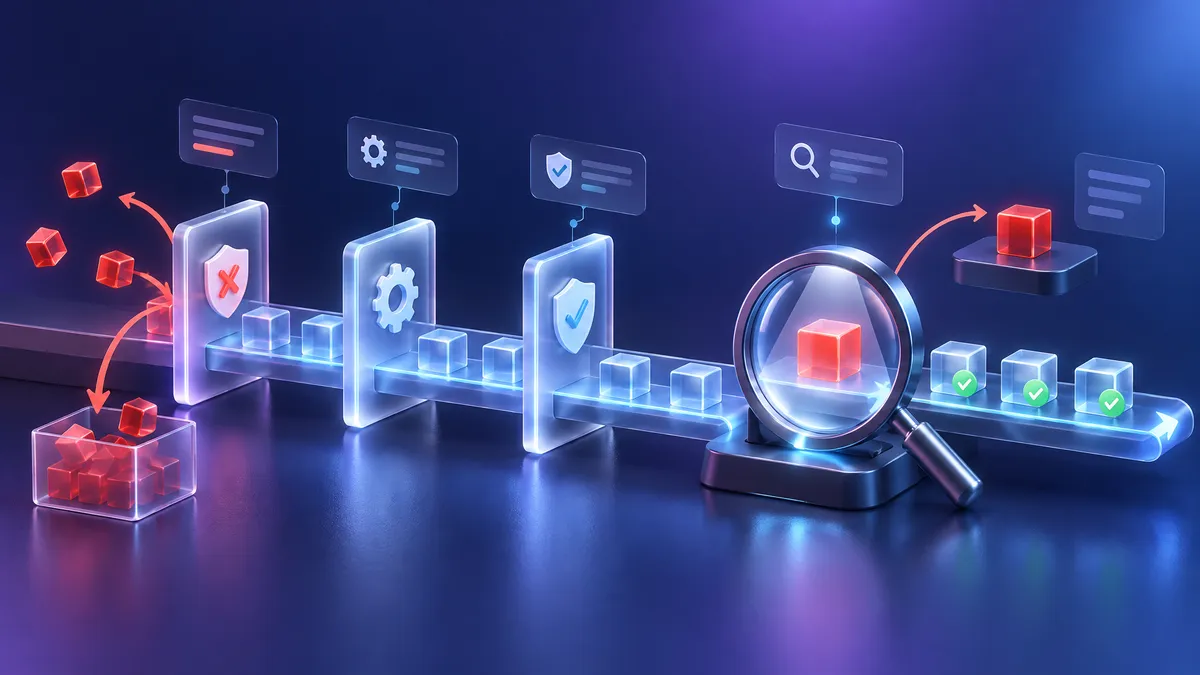
QA vs QC comes down to prevention versus detection: QA (quality assurance) is process-oriented and preventive, setting up the standards, processes and reviews that stop defects. QC (quality control) is product-oriented and detective: it inspects and tests outputs to catch defects before release. QA asks "are we building it right?" while QC asks "did we build it right?"
Both are parts of quality management, and most teams need both. For the software testing process itself (phases, test types and evidence), see the QA testing guide.
QA vs QC at a glance
Here is the short version, side by side.
| Quality assurance (QA) | Quality control (QC) | |
|---|---|---|
| Focus | The process. | The product or output. |
| Goal | Prevent defects. | Find and contain defects. |
| Timing | Before and during the work. | During and after the work, before release. |
| Key question | Will our process give a good result every time? | Does this output meet its requirements? |
| Who | Everyone, led by the quality team. | Inspectors, testers and lab analysts. |
| Typical activities | Standards, procedures, training, audits, reviews, supplier approval. | Inspection, testing, sampling, measuring, release checks. |
| Tools | A quality management system (QMS), SOPs, audit plans, risk analysis. | Test suites, gauges, checklists, control charts, lab instruments. |
| Output | Procedures, plans, training records, audit reports. | Test results, inspection records, accept or reject decisions. |
| Software example | A test strategy and a code review rule. | Running the regression suite on a release candidate. |
| Manufacturing example | Approving a supplier and training operators. | Measuring parts from each batch against the drawing. |
A quick way to remember it: QA writes the recipe and trains the cooks. QC tastes each dish before it leaves the kitchen.
ISO 9000 lists QA and QC as parts of quality management, next to quality planning and quality improvement. In practice, QA covers nearly the whole quality system, and QC is the checking part inside it. QA/QC means both sides working as one system.
What is quality assurance?
ISO 9000 defines quality assurance as the part of quality management that builds confidence that quality requirements will be met. That confidence has two audiences: your own managers, and outsiders such as customers, regulators and auditors.
In plain terms, QA builds the system that makes good results likely. Typical QA activities:
- Standards and procedures. Write down how the work is done, for example with a standard operating procedure template.
- Process design. Map each process, its owners and its checkpoints, as the process documentation guide shows.
- Training. Make sure people can follow a procedure before they use it.
- Reviews and audits. Review designs, documents and code, and audit whether the process is followed and works.
- Planning the checks. Decide what QC checks, when, by whom and against which criteria.
- Supplier approval. Qualify suppliers before you buy from them.
- Change control and CAPA. Manage changes, and remove root causes with corrective and preventive actions.
Working QA shows up as boring QC: fewer defects reach inspection because fewer get made.
What is quality control?
ISO 9000 defines quality control as the part of quality management focused on meeting quality requirements. In practice, QC checks real outputs (a part, a batch, a build, a report) against their requirements and decides what happens to them.
The ISTQB glossary for software testing defines quality control as activities that evaluate the quality of a component or system. Typical QC activities:
- Inspection. Incoming materials, work in progress and finished items.
- Testing. Functional, lab, load and destructive tests.
- Sampling. Check a sample when checking every item is too slow or would destroy it.
- Measurement. Dimensions, weights, temperatures and response times.
- Release checks. Confirm a batch, build or handover meets its acceptance criteria.
- Disposition. Decide what happens to a failed item: rework, scrap, accept with an approved deviation, or fix and retest.
QC records double as the raw data QA uses to improve the process.
The 4 types of quality control
There is no official list, but most guides name these four:
- Process control. Watch and adjust a process while it runs, such as oven temperature or line speed, so the output stays in spec.
- Control charts. Plot measurements over time against control limits to spot drift early. Walter Shewhart introduced them in the 1920s, and they are the core of statistical process control (SPC).
- Acceptance sampling. Inspect a random sample from a lot, then accept or reject the whole lot.
- Product inspection and testing. Check finished items against the spec, one by one or in a final test.
QA vs QC vs testing in software
Software teams blur these terms the most, because one person often does all three. The ISTQB Foundation syllabus (CTFL v4.0, section 1.2.2) draws the line clearly: testing is a form of quality control.
The syllabus calls QC product-oriented and corrective, and QA process-oriented, preventive and everyone's job on the project. Test results feed both: QC uses them to fix defects, and QA uses them to judge how well the development and test processes work.
| Activity | QA or QC | Why |
|---|---|---|
| Writing a test strategy or a test plan | QA | It decides how quality will be checked. |
| Definition of done, coding standards, pull request rules | QA | They shape how every change gets built. |
| Code review of one pull request | Both | The review rule is QA. Each review is a static check of one change. |
| Unit, API and smoke tests | QC | They evaluate a build. |
| Exploratory testing sessions | QC | A tester hunts for defects in the product. |
| UAT and beta testing | QC | Users accept or reject the release. |
| A retro or root cause analysis that changes how the team works | QA | It removes a cause, not one defect. |
Code review sits on the line. Most teams file it under QA because it prevents defects before merge, but ISTQB treats reviews as static testing. The practical rule: the policy is QA, and each review is QC.
A requirements traceability matrix is QA too: it plans which checks cover which requirement before any test runs.
QA engineers do both. Most of their day is QC (designing tests, running them, filing bugs), and the QA part is whatever changes how the whole team works.
QA and QC examples by industry
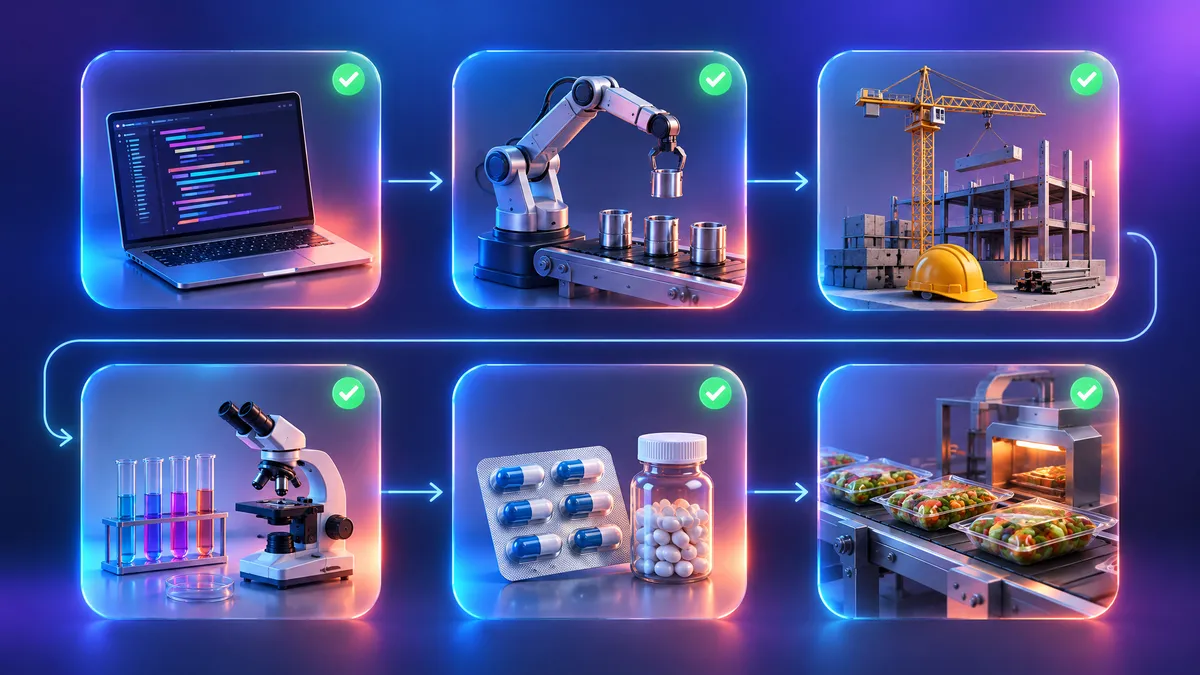
The split works the same way everywhere. Only the outputs and the records change.
| Industry | QA example (prevent) | QC example (detect) | QC record |
|---|---|---|---|
| Software | A test strategy and a definition of done. | Regression and smoke tests on the release candidate. | Test results and bug reports. |
| Manufacturing | Supplier approval, process risk analysis (PFMEA) and operator training. | First article inspection and in-process checks on control charts. | Inspection report. |
| Construction | A QA/QC plan, submittal reviews and pre-installation meetings. | Concrete slump and strength tests, inspections, punch lists. | Inspection and test records with photos. |
| Pharma | GMP procedures, change control and batch record review. | Lab tests on raw materials, in-process samples and finished batches. | Certificate of analysis. |
| Labs | Method validation, staff training and proficiency testing. | Blanks, duplicates and control samples in every run. | Control charts and run records. |
| Food | A HACCP plan, supplier approval and cleaning procedures. | Cooking temperature checks and metal detector tests at critical control points. | Monitoring logs. |
QA vs QC in construction
On a building project, QA is the system set up before work starts: the QA/QC plan, submittal reviews, method statements and inspection and test plans (ITPs). QC is the checking in the field: material tests, inspection of first installations and punch lists before handover.
The contractor usually runs QC on its own work, and the owner or designer verifies it. On US federal-aid highway projects, 23 CFR 637 defines QC as the contractor's work to meet the contract, while the state agency's QA program accepts the material, partly through its own verification tests.
QA vs QC in pharma and labs
Pharma separates the two most strictly. QA owns procedures, deviations, change control and the review of batch records before release. QC is the lab that tests raw materials, in-process samples and finished product.
US rules word it differently. 21 CFR 211.22 requires one quality control unit with the authority to approve or reject materials and drug products and to review production records. Most firms split that unit into a QA department and a QC lab.
In testing labs (ISO/IEC 17025), QC means the blanks, duplicates and control samples run alongside real samples. QA is the wider system: validated methods, trained staff, audits and proficiency tests.

Tired of plain screenshots? Try ScreenSnap Pro.
Beautiful backgrounds, pro annotations, GIF recording, and instant cloud sharing, all in one app. Pay $39 once, own it forever.
See pricing and featuresHow QA and QC work together
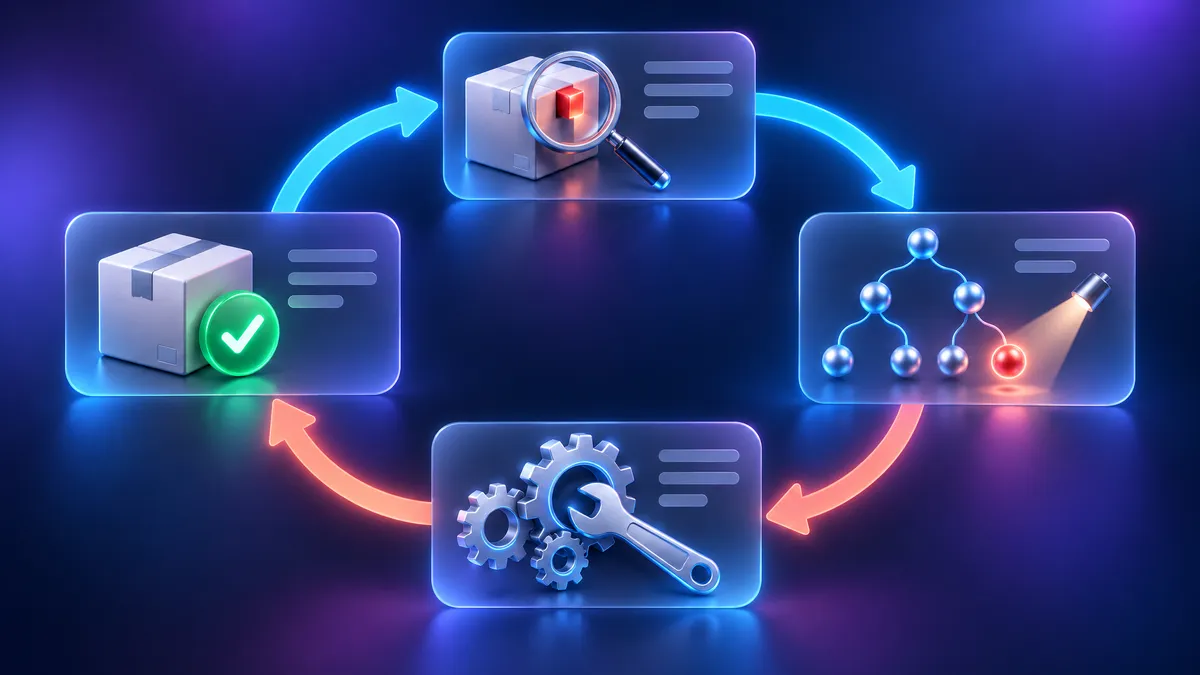
QA and QC form one loop: QC finds defects, and QA changes the process so they stop.
- QA sets the standard: procedures, acceptance criteria and the checks to run.
- The team does the work, and QC checks the output against the criteria.
- QC contains the defect: the item or build is held, then reworked, rejected or fixed and retested.
- Root cause analysis finds why. Keep asking why until you reach a cause the process owns, not a person to blame.
- QA changes the process (a procedure, a check or the training) and logs it as a CAPA.
- QC confirms the fix worked: the same defect stops showing up.
This is the classic PDCA cycle (plan, do, check, act): QA owns plan and act, and QC runs most of check. A root cause analysis template keeps step 4 short and stops it from turning into a blame meeting.
Worked example: one checkout bug, both sides
Regression on release candidate 2 shows a checkout total 1 cent off for some currencies. Finding it is QC, and so is the response: hold the release, fix the bug, rerun the test.
Root cause analysis shows the pricing code changed without a billing reviewer, and no unit test covered rounding. The QA fix: billing reviewers become required for that folder, and rounding checks join the definition of done. Over the next releases, QC confirms that rounding bugs stop reaching regression.
A factory runs the same loop. Final inspection finds burrs on 3% of brackets (QC), the lot gets sorted, the cause is a worn deburring tool, and QA adds a tool-change limit to the work instruction.
Metrics for QA and QC
Measure each side by what it controls: QA metrics show whether the process works, and QC metrics show what the checks find.
| Metric | Side | How to calculate it | What it tells you |
|---|---|---|---|
| Audit findings | QA | Nonconformities per audit, by severity. | Where people skip or fight the process. |
| Process compliance | QA | Items that followed the process ÷ items sampled. | Whether the process is real or only on paper. |
| Escaped defects | QA | Defects found after release, per release or month. | What gets past every check. |
| Defect removal efficiency | QA | Defects found before release ÷ all defects found. | How much the process catches in house. |
| Defect density | QC | Defects ÷ size (per 1,000 lines, units or square meters). | Where defects cluster. |
| First-pass yield | QC | Units that pass the first time, with no rework ÷ units started. | How often work is right the first time. |
| Inspection pass rate | QC | Items passed ÷ items inspected. | Output quality at each gate. |
Read the numbers in pairs. A high pass rate with rising escaped defects means your checks miss what customers find. Many defects at inspection but few escapes means QC works and the process upstream needs QA.
QA and QC roles and documents
Most companies split the work like this:
| Role | Side | Owns |
|---|---|---|
| Quality manager | QA, oversees QC | The quality system, audits and management review. |
| QA engineer (software) | Both | Test strategy and plans (QA), test design and runs (QC). |
| QA specialist (pharma) | QA | Procedures, deviations, batch record review and release. |
| QC inspector or lab analyst | QC | Inspections, tests and their records. |
| Internal auditor | QA | Audits against the standard and the procedures. |
The documents follow the same split. QA writes the quality plan, the procedures and the inspection and test plan. QC fills in checklists and inspection records, and raises nonconformance reports or bug reports that QA trends over time.
Here is a one-page QA/QC plan you can copy:
# QA/QC plan: [project or product]
1. Scope and quality objectives: [what is covered · measurable targets]
2. Requirements: [specs, drawings, codes, regulations]
3. Roles: [QA owner · QC owner · release approver]
4. QA activities: [reviews, audits, training, supplier checks]
5. QC activities: [inspection or test · when · acceptance criteria]
6. Records: [what is kept · where · how long]
7. Nonconformities: [how to raise, contain and close them]
8. Improvement: [root cause analysis · CAPA · review dates]
And a QC inspection record for each check:
QC inspection record
Item and version:  [part number, batch or build]
Requirement:       [drawing, spec or acceptance criteria ID]
Method:            [visual, gauge, test case, lab method]
Sample:            [all items, or sample size and plan]
Result:            [pass or fail · measured values]
Evidence:          [photo or screenshot file names]
Disposition:       [accept · rework · reject · approved deviation]
Defect raised:     [NCR or bug ID]
Inspector, date:   [name · yyyy-mm-dd]
Evidence: photos and screenshots
A QC record is only as good as its evidence. Each photo or screenshot should show the defect, where it is, and the build or batch it came from.
On a site, add a scale reference and the location or part number. In software, number the steps, add one arrow and an "Expected · Actual" callout, and keep the build number in view.
Cover personal data, tokens and customer details with a solid box, because blur and pixelate can be reversed. Then attach the file itself to the bug report, NCR or test run, so the evidence stays with the record.
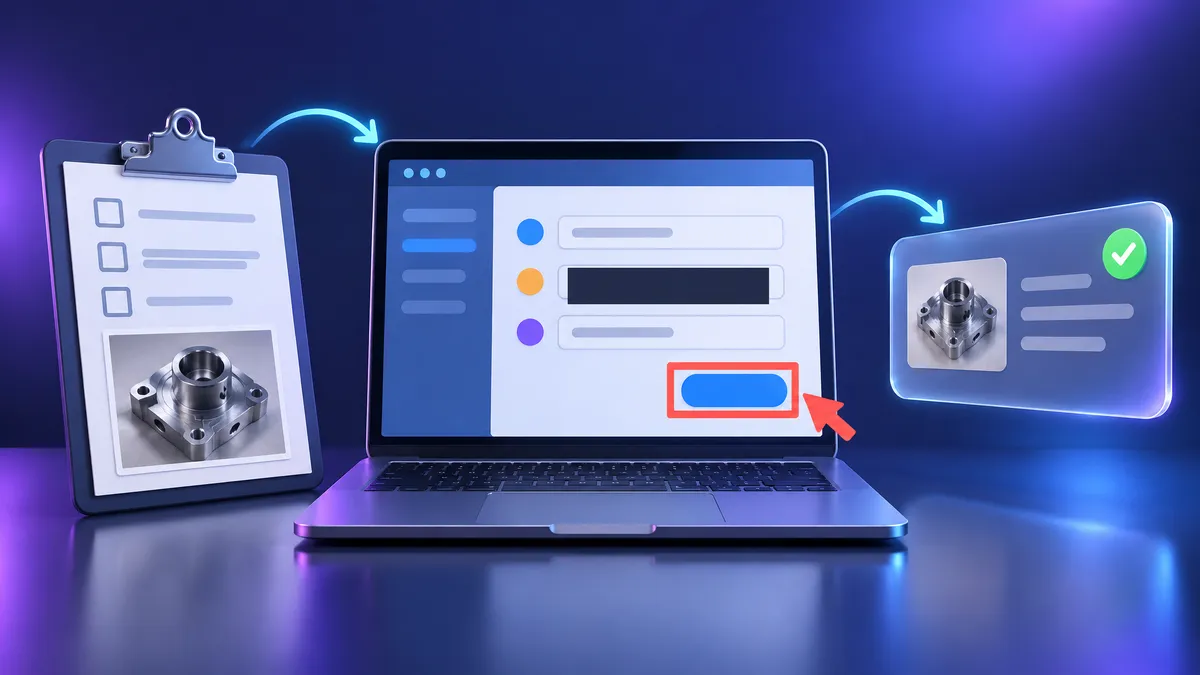
For software QC evidence, ScreenSnap Pro (Mac and Windows) keeps that routine in one app. Capture a region, number the steps with the counter tool, add an arrow and a callout, and cover personal data with a filled rectangle. For a bug that only shows in motion, record the screen, trim the clip in the built-in editor and export an MP4 or GIF.
No capture app on the inspection PC? The free image annotation tool adds solid boxes, arrows and text to a photo in the browser.
Common misconceptions about QA and QC
- "QA means testing." Testing is QC. A team that only tests does QC under a QA title, and the same defects keep coming back.
- "QC is only for factories." Any output can be checked against a requirement: a build, a lab result, a weld or a contract.
- "More QC fixes quality." Inspection finds defects but does not stop them being made, which is why W. Edwards Deming told managers to stop relying on mass inspection. A bigger bug bash finds more bugs, but only a process change makes fewer.
- "Automated tests are QA." They are QC that runs by itself, from unit tests to visual regression testing. Deciding what to automate, and when a failure blocks a release, is QA.
Frequently Asked Questions
Close the loop on your next defect
Take the next defect QC finds and run it through the loop: contain it, trace the cause, change the process and confirm the fix. One closed loop teaches more than any table.
If your QC evidence lives in screenshots and short recordings, ScreenSnap Pro handles capture, numbered steps, solid-box redaction and screen recording in one app. It is a one-time $39 purchase: 1 license, 2 seats (2 computers, Mac or Windows). See pricing.

Morgan
Indie DeveloperIndie developer, founder of ScreenSnap Pro. A decade of shipping consumer Mac apps and developer tools. Read full bio
@m_0_r_g_a_n_